
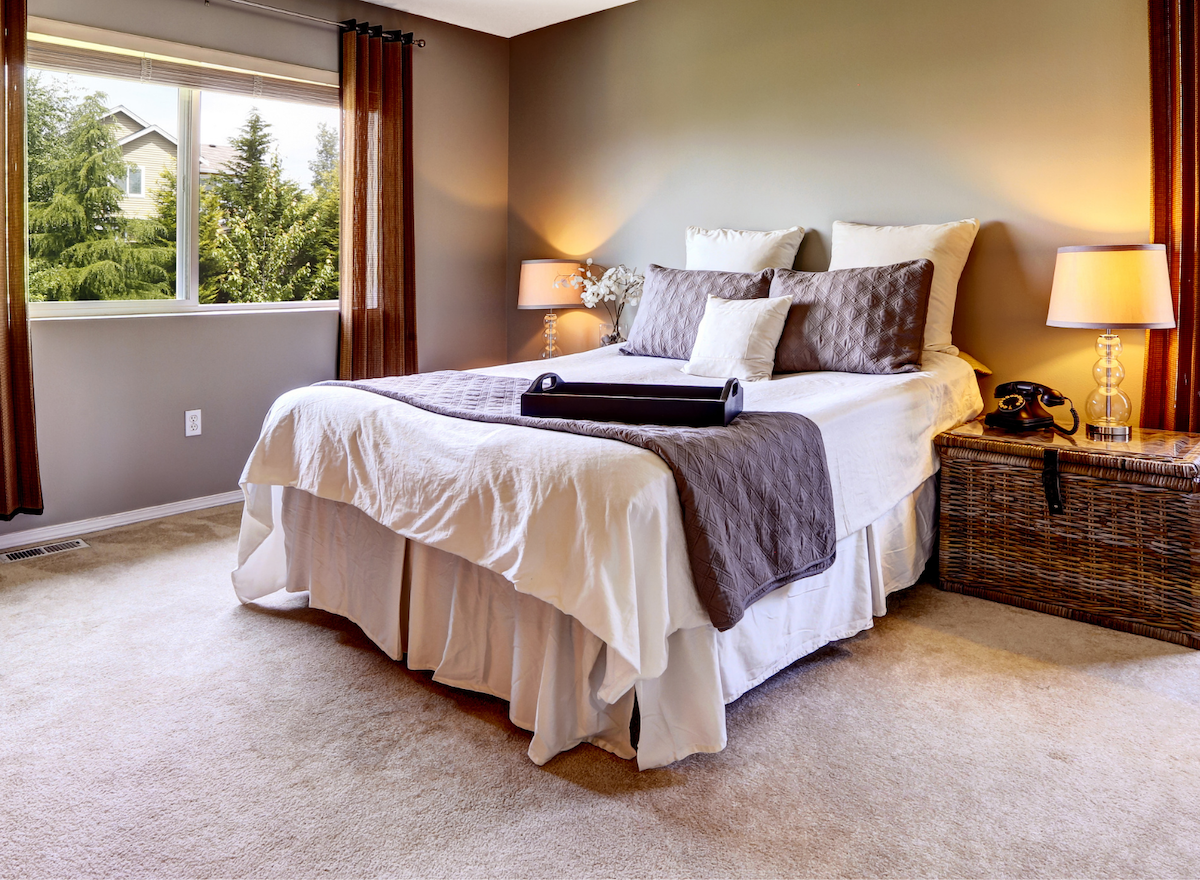
When evaluating the carpet types for the new refurbishment project, you will likely come across Saxony carpets. Such carpets are the most popular choice and for many good reasons. In this post, you will learn what the Saxony carpet is, what makes it different from other carpet types, and how to take care of these carpets and make them last longer. We will also try and answer the most frequently asked questions about Saxony carpets.
What Is a Saxony Carpet?
Saxony carpets are an everlasting classic that never goes out of style. This traditional carpet style is characterised by same-length cut piles, very soft fibers (so lovely to walk on barefoot), and an absolutely sleek surface. It usually has mid-height piles, a little longer than traditional Berber carpets. There are Saxony carpets made of polyester, nylon, and wool. Nylon, however, is the most popular choice.

There is a wide range of Saxony carpet characteristics, so it may be used in every room in the house.
Manufacturers create a uniform surface from the carpet’s broadloom woven loops by shearing. The pile is woven in such a way that it is very thick and tightly packed with plush carpet fiber. The best Saxony carpets are made entirely of nylon and have a pile height of no more than half an inch. The carpet has a velvety and soft feel because of its structure.
Types of Saxony Carpet
While all the Saxony carpets have similar features (like the cut piles), there are a few different types: straight and textured. Let’s see what) the difference is.
Straight Saxony
This is the most luxurious-feeling carpet type. Straight Saxony carpets are characterized by absolutely even coloring. How does the manufacturer achieve it? The answer lies in the weaving process—when all the carpet fibers are running in the same direction. Even though the texture is quite unlike that of velvet, they are often referred to as velvety because of their visual resemblance to velvet.
If you run your fingers through the fibers of a straight Saxony carpet, you will spot the even fibers immediately. Once you remove the hand, you’ll notice that the strands that have been disrupted will take on a new hue because they will be moved in the other direction. Because of the way the fibers are aligned, these carpets have a very relaxing appearance and feel, but they are more likely to show footprints and strokes from the vacuum. In fact, they will reflect your every touch.
Textured Saxony
The textured Saxony, which is also called trackless, is a type of Saxony carpet that has been getting more and more popular in recent years. The main difference between this style and a straight Saxony is that textured carpet fibers are twisted or bent in different directions. They have a unique way of reflecting light, so when you run your palm over the surface, you won’t see nearly as much of a contrast in color as you would with other materials. Textured Saxony carpets are a great choice for homes with a lot of foot and vacuum traffic because they help hide marks like these.
Today, Saxony textured carpets are one of the most sought-after carpet types. They have a less formal appearance than the traditional straight Saxony carpets. If you want a luxurious and plush appearance but are worried about patterns of foot traffic and markings left by a vacuum cleaner, such carpets are an excellent choice.
The Advantages of Saxony Carpet
- Saxony carpets have an unmatched luxurious look and feel and are super soft to walk on. It will add a homely look to any environment. Saxony carpets are a popular choice for dining rooms and living rooms.
- They perform equally well in commercial and residential areas.
- It’s a timeless carpet type that will never go out of style.
- Saxony is durable, especially the textured type, and can withstand heavy foot traffic.
- It’s a pet-friendly carpet style. Because of the cut piles, your pet’s claws won’t get trapped in the fibers.
Saxony Carpet’s Drawbacks
- Straight Saxony carpets reveal marks from foot traffic and vacuum cleaners. Be prepared to look at slight discolorations.
- Saxony carpets are not suitable if you are looking for a sophisticated style with various patterns. Saxony carpets have a very luxurious-looking style, but are boring for some.
How to Select a High-Quality Saxony Carpet
There is a notable contrast in the way these carpets feel: Saxony carpets have a soft cut pile and a soft, velvety feel, whereas textured Saxon carpets frequently have coarse-finished fibers.
If a salesman tells you that a certain sort of carpet is a good price, don’t take their word for it. Do your own research. Look at the label, touch the carpet, and ask the salesman about the popular quality indicators.
Look at the carpet that has at least a face weight of 34 to 40 ounces. This is the fiber content per square yard. Around 20 to 80 is a typical range, and the denser and more robust carpets have a greater number.
They must be at least 2,000 on the density scale. The tightness and thickness with which fibers are packed determine density. Generally speaking, the denser and heavier the carpet, the more durable it is. Make a reverse bend in the carpet sample (Photo). It’s a low-density (lower-quality) carpet if the backing is visible.
Before you commit to a carpet color that is neutral, you should first decide whether you want it to draw attention to itself or blend into the surroundings. To keep your room from looking boring, only use neutral colors where your walls, furniture, or art are the main focus.
As with textured carpets, stains may be hidden by using dark colors or patterns. To avoid looking out of place in decor, avoid mixing and matching different patterns of the same color.
FAQs about the Saxony Carpets
What Type of Underlay Works Best for Saxony?
Choosing the appropriate underlay is critical because it affects the way your flooring feels, looks, and wears over time. When laying new flooring, it’s possible that some people may decide to reuse an old underlay, but this is not recommended.
When it comes to renovations, whether it’s a house renovation, an office makeover, or anything in between, it’s a good idea to get a new carpet underlay installed.
If your carpet is in a high-traffic area, the use of an old underlay can cause it to wear unevenly, causing your flooring to exhibit indications of wear.
Polyurethane underlay, more often referred to as PU underlay, is the ideal choice for Saxony carpets.
How wonderful is this form of padding? It is available in a range of thicknesses and densities, which makes it a versatile material that may be used for a variety of flooring applications. Also, there’s no need to stress about money! The PU underlay is very budget-friendly.
Saxony Carpet Cleaning Instructions
Cleaning Saxony carpets doesn’t require as much effort as other types. Vacuuming on a regular basis can keep the carpet looking clean. You may prolong the life of your Saxony carpet by removing any spills that may occur as soon as possible. Vacuuming your carpet might leave marks because of the fibers’ nature. They’ll be gone soon enough.
Is Saxony Carpet Suitable for Stairs?
The staircase is a very high-traffic area. Because of how easily marks show on the Saxony carpets, it’s not recommended to install them on the stairs. Their plush texture won’t last long, and you will end up having to replace them very soon.
Conclusion
The plush texture makes Saxony carpets a well-liked option for residential use, and the classy appearance of the flooring may give a space a more lavish atmosphere. You may also find this type of carpet sold under the label “plush carpet,” since some people perceive it to be a more refined kind of carpet. If you’ve ever walked into a room and felt how soft the carpet is, you’ve probably just seen a Saxony carpet.
When selecting Saxony, it is important to remember that the endurance of the carpet will be determined by a number of factors. Both the density and the twist of the fibers will have an effect on the finished product. When making your choice, you should make an effort to keep all of the relevant factors in mind, especially the mentioned advantages and disadvantages of Saxon carpets. If you are planning to install Saxony in heavy traffic areas, go for the high-twist textured style instead.