

What Makes Dark Wood So Popular?
There are a wide variety of natural dark types of wood, but not all of them are equally suited for flooring or furniture making. A wood’s soft composition is the most prevalent reason why it cannot be used for flooring applications. Softwoods are woods that are pliable in nature, whereas harder woods are referred to as hardwoods! Baseball bats, furniture, boats, and floors are just a few of the many things made from hardwoods, which is why they’re so valuable.
Dark wood is not only practical and very useful, but it also comes in a mind-bogglingly large and diverse palette of stunning colors, textures, grains, and hues to choose from. In this post, we will take a look at different types of dark wood, and how they are used.
When it comes to interior or exterior projects, dark types of wood may add a sophisticated and elegant touch to any room, whether it’s conventional or modern in design.
You can bring elegance, boldness, and dramatic flair to any area by decorating with dark wood. There are several species that are acclaimed for their effortless luxury. If you use dark wood and complex, detailed carvings in your furniture and home design, you will create a classic sense of richness and mystique in your space.
In addition to being easily converted into modern designs (particularly for flooring), dark wood species may also be used to create a contemporary, minimalist look.
Types of Dark Wood
Wenge
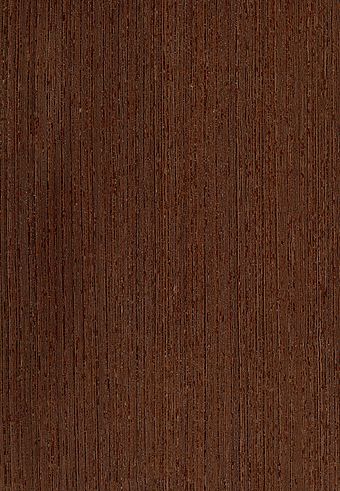
It is scientifically known as wenge wood (also known as Millettia Laurentii) and is native to Central Africa. Wenge is a rare and endangered dark wood variety that originated in Central Africa. Due to its potential to grow up to a maximum height of 18-27 meters and a trunk diameter of around 1 meter, the Wedge wood type has earned widespread attention across the globe for its durability, resilience, and immunity to termite attack. Even though it is now the most often used wood for the production of veneers and panels, as well as furnishings, turned objects, or high-end musical equipment, its position on the market is diminishing due to a scarcity of young trees.
Wenge has a dark brown color, that may sometimes have lighter lines or even alternate dark and light stripes, depending on the species. It is a strong tropical wood that ranges in hardness from hard to extremely hard and is resistant to termites, borers, and fungus. As a result, it is not essential to treat it.
Wenge is a very versatile species because of its qualities.
Although wenge’s price is rising as a result of the increased availability of fresh timber, it remains in high demand due to its excellent durability, structure, and visual aesthetics.
Because of its strong resistance to scratching and abrasion, as well as its ability to accept a high level of polish and smoothness, it is the recommended choice for flooring, building, and external usage.
Common Uses of Wenge
Wenge is a particularly strong, rigid, and long-lasting wood that is used in sporting goods. It has excellent shock resistance characteristics. As a result, it is commonly seen on athletic products and tool handles. It has a modulus of elasticity (MOE) of 1.97 million pounds per square inch. It is an excellent wood for enduring severe shock levels.
The color of the Wenge furniture goes from moderate to dark brown. It is frequently seen as a decorative wood for desks and cupboards, particularly in the kitchen. Wenge is regarded to be the best choice for furniture construction. Products made of Wenge improve with age and add a sumptuous, bold, and dramatic atmosphere to any room, they are a good investment.
Wenge is an excellent choice for the manufacturing of musical instruments. It has a pleasing resonant tone, is visually appealing, and is long-lasting.
Care and maintenance are essential to ensure that the wood lasts for a long time.
Walnut

There is a lot of character in the texture and color of black walnut wood. Woodworkers admire it for its strength, texture, and color, among other characteristics. The sapwood is a creamy white, while the heartwood is a rich chocolate brown. It polishes to a really smooth finish.
The colors of walnut wood vary depending on whatever part of the trunk the wood comes from. Sapwood is found at the very end of a tree’s trunk. The sapwood of a walnut tree is a variety of colors, ranging from yellow and greyish to practically creamy white. The heartwood of a walnut tree is characterized by its bright hues. Gray, red streaks, purplish tones, and dark streaks are mixed in with the light and dark brown tones, and there are also some reddish rays and purplish tones mixed in with the bright and dark brown tones.
Despite the fact that there are several types of walnut trees, only a small number of them are indigenous to North America. Eastern Black Walnut, commonly known as American Black Walnut or just the American Walnut, is the species that is most commonly used for woodworking purposes.
It is usual to find walnut wood in carvings and gunstocks, as well as in cabinets and other woodworking projects such as furniture, floors, and wood veneers.
It is regarded as a high-end wood. As a result, it is more costly than other dark types of wood. Unlike other types of wood, walnut timber is rarely accessible in long pieces, and it typically has more knots when compared to other types of wood. As a result, you have to buy a large number of trees in order to manufacture furniture, increasing the cost.
Mahogany

Hardwood mahogany wood is found mostly in North and Central America. In the United States, mahogany is used in a wide range of products.
It has a thick grain and a red-brown hue that make it quite well-known. Mahogany is excellent at polishing and nourishing. It takes on a richer reddish-brown luster after polishing. As a result, it has an eye-catching appearance and is built to last.
Furniture and fittings can be made from mahogany wood. Along with its unique beauty, mahogany wood has several drawbacks. We will see them in detail below.
Mahogany tree species
Despite their common ancestry, more than a half-dozen woods are classified as Mahogany despite being derived from the same genus.
Experts, on the other hand, believe that only mahogany species from Cuba, Honduras, South America, and Africa qualify as mahogany.
- Cuba Mahogany
- Honduras Mahogany
- African Mahogany
- South America Mahogany
It is sought after for the beautiful reddish to pink colors and for its straight grain, which is less prone to knots and gaps. The reddish-brown hue darkens over time. Mahogany wood has a beautiful crimson shine when polished and is known to be a long-lasting wood.
Durability and resistance are the hallmarks of mahogany. A Forest Research test in 1985 found that mahogany wood also tested quite well in ground contact. The durability test assigned a class 2 rating to Fijian mahogany.
As a result, mahogany is an excellent choice for decking since it requires little upkeep and may endure for up to two decades. With proper maintenance, it’s possible to get 40-50 years out of it.
Also, it can withstand harsh conditions and poor soil for an extended period of time. In this piece of wood, there is absolutely no decay.
As a result, it is extremely resistant to moisture and even direct water contact. It may be used to make decks and boats.
Mahogany is a hardy wood that can survive the elements. As a result, it’s found in a variety of outside products, including wall paneling, patio furniture, garden chairs, and benches. Even though it’s hardwood, this wood is very easy to work with. That’s why it’s perfect for hand tools. It’s easy to work with both little and large tools on this type of wood. Carvings on mahogany look stunning!
Each year, there is a rising tide of interest in Mahogany Wood. As a result, this wood is in low supply. This is why the price of it is going up every day.
Recommended reading: Nominal Lumber Size Dimensions
Ebony
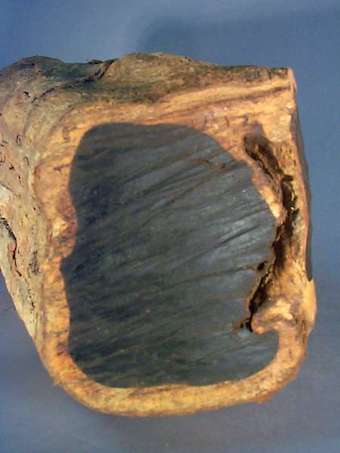
Ebony is a kind of African wood that has a very dark coloration. There is very little grain visible in it. It is a wonderfully smooth porous wood that is quite hard and dense, making it a sturdy wood that is tough to work with, but it is also a really intriguing wood to work with and play with. East African countries Mozambique and Tanzania are home to ebony trees, which are a kind of hardwood. It is one of the most costly dark types of wood.
This rare and unique form of wood is treasured for its black heartwood, which makes it one of the most desirable and pricey types of wood available anywhere on the planet. Blackwood has traditionally been used to make charcoal, native sculptures, needles, and cutlery, among other things. Fine texture, high density, and waxiness make it ideal for making woodwind instruments like clarinets. It is also good wood for guitar fretboards because it can hold the metal fittings better and is used to make fine furniture.
Ebony has long been treasured for its use in the manufacture of oboes and piano keys. Aside from that, this wood is also commonly used in the manufacture of violins.
Patagonian Rosewood

This kind of wood is found in Bolivia and Paraguay. Patagonian Rosewood, also known as Curupay is a beautiful wood that blends well with virtually any interior style or color scheme. Curupau’s adaptability is due to the fact that its delicate pink and yellow tones are starkly contrasted with its dark brown heartwood, generating a pleasing contrast that is accented by the wood’s crossing grain, which results in a lovely mix of rich browns and yellows. Curupau wood is available in a variety of sizes and shapes. Aside from its incredible endurance, curupau also has a Janka hardness value of 3,840, which makes it extremely resistant to wear and tear as well as impacts. Curupau will darken if exposed to light for an extended period of time.
Despite the fact that it is not a real Rosewood, it exhibits many of the same characteristics and hues. It is far less expensive than genuine Rosewood, which is a significant benefit! Get creative with your woodworking projects with this material, which may be used for a variety of fine woodworking applications.
Because of its hardness, it may be difficult to deal with and can cause cutting edges to become badly blunted. If you want to prevent damaging the wood’s uneven grain, you should plane it at an angle of 10 to 15 degrees.
Teak
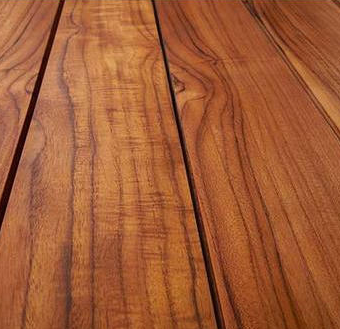
It’s no surprise that teak is among the most popular hardwoods on the market when it comes to durability and beauty. In addition to southern Asia, the teak tree may also be found in Africa, Latin America, and other tropical locations. This wood originates from the teak tree.
Generally straight-grained, teak wood has a rough and irregular texture. The wood has natural oils that make it resistant to decay and insects. Teak, despite its oil content, is a simple wood to deal with, lending itself well to both glues and finish applications. Teak and mahogany wood are quite similar in appearance, however, teak has a distinctive brown color, whilst mahogany is frequently red in color.
In addition to being used for boats, teak is also a popular choice for furnishings and minor wood crafts.