
Many people use the words “mat” and “rug” interchangeably and don’t understand the difference in their meanings. However, there is a significant distinction between a rug and a mat, and in this post, we will explain it to you.
What is a Mat?
Mats originated in the second half of the 19th century with the development of factory textile production. Initially, they were crafted from old clothes, fabric scraps, and remnants of yarn. The materials used could include various options such as bog, cattail-type plants, and occasionally, old fishing nets.

The term “mat” derives its meaning from a piece of fabric or material intended for placement on the ground. Mats are notably smaller products when compared to rugs and can serve various functions within a household. The specific function they serve determines the type of mat you should consider purchasing.
What are the Types of Mats?
- Doormats. This mat is usually rectangular in shape and is placed near the door for people to wipe their shoes on. Doormats are usually heavy enough to stay in place and are made of durable materials such as rubber, nylon, coir, or cloth. Doormats are placed either outside of the door or inside the entryway. A true lifesaver, our houses would be so much dirtier if not for the doormats. Sometimes, people also call it a welcome mat, because it welcomes guests with coziness. They also protect hardwood floors from the dirt that causes scratches.
- Baking mats. These are used as a multi-use substitute for parchment paper.
- Table mats. They are placed on the table to preserve the surface of the table from scratches and hot dishes. These are also called placemats.
- Bath mats. The most common materials are rubber, polypropylene, and bamboo. These mats are placed on the bathroom floor and create a warm non-slip surface for your feet.
- Exercise mats. These include yoga mats, playmats, and kid mats. Such mats are perfect for home exercises.
- Car mats. Usually, comes in a set of 3 or 4 mats, and protects the car floor.
- Anti-fatigue mats. They are used in the kitchen area, and also by professional stylists and cooks. The purpose of such a mat is to relieve the stress caused on your body by the long periods of standing while cooking, or working.
- Cleanroom mats. These are mats placed in sterile rooms that need extra protection from the outside dirt. These mats are sticky and non-slip, they capture the dirt and have multiple layers.
High-quality floor mats have another important feature, they have been proven to improve the indoor air quality (IAQ) index. Moreover, they ensure safety in industrial and domestic uses. Independent studies have revealed that the majority of toxic chemicals that we bring to the home, end up inside a house on dirty shoes.
If you have a nice doormat, it will effectively trap and hold the chemical dirt, and allergen. It will improve the overall IAQ index in your home environment, and reduce the necessity of daily floor cleaning. The safety aspect of the floor mats is that they provide a stable surface, preventing you from slipping and tripping.
What is a Rug?
A rug is a piece of carpet that can have different sizes, depending on design, and placement. Unlike the carpet, which is attached to the floor, rugs can be easily moved around and placed where you wish.
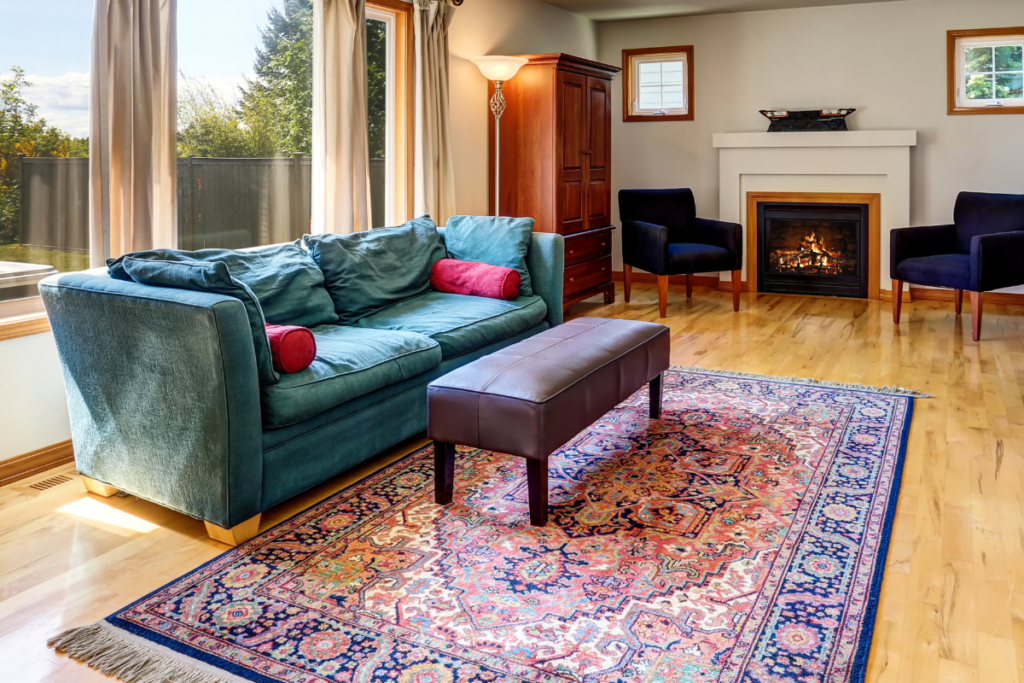
In general, they are larger than mats. Rugs are not created for dirt-trapping, but they can also serve many purposes in addition to aesthetic ones. Rugs do not require special installation and can be moved around and replaced easily.
The rug is one of the oldest inventions for decorating and protecting any home floor: from the yurt of a nomadic tribe to a luxurious baroque palace. For many centuries, a nice rug was not only a symbol of prosperity but also an object of art, since its manufacture required hard painstaking manual labor.
Rugs come in various colors, patterns, and sizes. The most commonly used materials are synthetic materials like polypropylene and nylon, and natural fibers like wool, sisal, jute, and cotton. They add beauty to any interior and provide the finishing look that makes the design complete.
Just like mats, they are very easy to maintain and many of them can even be machine-washed. Absolutely all rugs can be divided into two categories: handmade rugs and machine-made rugs. However, there are also many nuances that determine the type of production and features of a particular rug.
Rugs are usually very easy to clean. It can be done at home. The majority of them can be cleaned by dusting and vacuum cleaning. A lot of products are also machine-washable, so read the label carefully to see if this option applies to your product.
What’s the Main Difference Between Rug and Mat?
To conclude, we have summed up the key differences between rug vs mat:
- Size. Mats are usually small, and they only cover the specific area that they serve to protect. Rugs, on the contrary, are larger pieces and usually cover a large area, for example, the total seating room area in the living room.
- The main difference between mats and rugs is that the mat is a heavy-duty and usually thick product. Mats are created to withstand heavy use and heavy foot traffic. However, with proper care, rugs can also be highly durable, depending on materials and placement.
- Mats are created for a specific function, while rugs can be universal and serve mainly for design purposes. They give a luxurious feel to the interior and are often a work of art.
- Rugs can have various shapes, be oval, round, rectangular, etc. Mats, on the other hand, are usually rectangular. The size is also different. Mats are normally much smaller compared to the rugs.
- Compared to the rug, the mat is easy to clean and requires minimal maintenance.
- Price. Another mat and rug difference is the price of the products. Rugs are usually much more expensive compared to mats. The reason for that is their size, complexity of the production, and looks. Rugs serve not only practical but aesthetical purposes, that’s why producers invest more resources into making them visually appealing. This doesn’t mean that the mats can’t be pretty, on average they are just cheaper to produce, and homeowners change them more frequently, thus a cheaper product is more reasonable.
Final Words
Mats are typically smaller in size compared to rugs, and they serve specific purposes. Mats are commonly positioned in the kitchen for cushioning or near the front entrance. As mentioned earlier, there are various types of mats.
I trust that this post has shed light on the distinction between a rug and a mat. Now that you’re acquainted with the fundamental disparities and characteristics of mats and rugs, you can appreciate why someone shouldn’t use these terms interchangeably. These distinctions are quite straightforward to grasp and should be taken into account when determining which product is suitable for your home.