
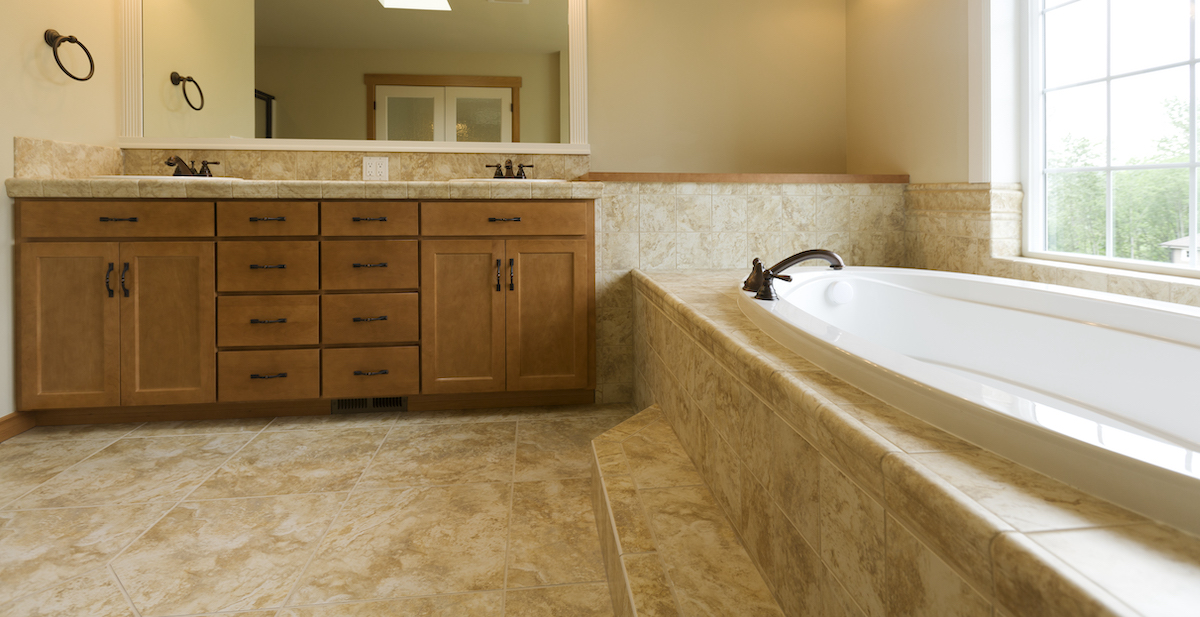
Ah, those beautiful travertine floors! Travertine is a type of limestone that has a marvelous marble-like appearance. It has a fibrous structure and usually has beach and earth tone colors. Such a beautiful appearance makes it a very popular choice for different building purposes. You will often find travertine floors in indoor and outdoor areas such as kitchens patios terraces and balconies. It works really well as a swimming pool deck flooring. The majority of travertine available on the market today comes from Mexico Turkey Iran and Peru. In the old days, this beautiful stone was mostly used in northern Italy. Despite being a stone, travertine has a delicate surface structure which makes it vulnerable to the outside conditions. That’s why you have to remember about dos and dance when it comes to cleaning. In today’s post, I will describe all their popular methods of cleaning the travertine tile floors and how to keep them clean for a longer time.
Best Way to Clean Travertine Tile Floors
Okay, let’s jump to method number one. For this popular way to clean travertine tile floors you will need the next equipment and materials:
- 1 tablespoon mild, non-acidic dish soap
- 2 gallons of lukewarm water
- Baking soda
- Sealant
- Vacuum cleaner or a broom
- Microfiber towels
- Mop
- Brush to scrub the grout
- Bucket
Now let’s see the process step-by-step. First of all, you have to vacuum clean or sweep the floors with a broom. This is an important step because you have to remove all the small dirt particles which may scratch the floors during the cleaning.
After sweeping delicately clean the floors with a mop. With your mop in a small amount of lukewarm water – the mop has to be almost dry make sure not to dampen your floors too much. Applying too much water on the floors may wash away the sealant or destroy the grout. It may later lead to even more dirt getting trapped in the tiles. Oversaturating the tiles with water will also result in degradation and discoloration of the precious travertine floors.
Wash the floors with dish soap. For this mix 1 tablespoon of non-acidic dish soap in a gallon of lukewarm water. Mob the travertine floors using this mixture. After that mop the floors with clean water to remove any soapy residue. Let the floor dry.
Now when your floors are clean it’s time to take care of the grout lines. Now, this is a tricky part – you have to clean them crowd lines without over-scratching them. Trying to be careful not to mar the stone. Baking soda comes to our rescue once again. Mix it with water and apply this paste to the grout lines. Scrub it gently to clean the grout and then clean the area with a wet mop. You can use a microfibre towel to clean and dry the surface.
It’s a last and most important step in cleaning the travertine floors is sealing. Even if your tiles were pre-sealed during the installation, you may still need to repeat this process. To see if the tile has to be sealed make a small test. Splash some water on for dry tile. If the water gets absorbed and the color of the tile darkens it means that there is no sealant on the surface. If you have a stone that has been properly prepared and is dense and porous, you can evaluate whether a water-based or a petroleum-based sealer is required.
Check with the tile manufacturer for their recommended sealer, and then get the best sealant that fits within your budget. Repeat this process once every few years, make sure your travertine stone floor is fully completely dry when you apply a low-VOC sealer that is suitable for the stone. Sealants are available in two varieties: a surface and a penetrating sealer. These two types of sealants are frequently used in combination to keep water from entering the stone.
How to Clean Travertine Tile Flooring Installed Outdoors
As I mentioned above travertine floors are a very popular choice for the outdoors. They are perfect for so many applications in the gardens and patio areas. If I were a color wheel and cozy look to any exterior. The most important step in travertine floor maintenance is regular cleaning. You have to make a regular deep clean at least once a year. To do this you can simply wash the floors with clean water. Removing the dirt as soon as possible will prevent it from building up. If you fail to clean the floors regularly you will most likely require professional help. There are many techniques for cleaning outdoor travel time floors such as hydraulic, hydro-air, or plain water.
In case you have an older building, with a lot of dirt accumulated on the travertine floors, the cleaning process will be a little more difficult compared to newer structures. Good news: the majority of the dirt buildup can still be removed with a pressure washer. If extra cleaning is required, soft bristles brushes should be used. Be extra careful and refrain from using chemicals to clean such floors. Harsh substances may be damaging to their look and should only be performed by qualified people.
Want to keep your outdoor travertine floors clean for longer? Just sweep or dust surfaces on a regular basis in order to minimize the development of scratches and discolorations on natural stone. Keep your floor clean using lukewarm water and a mop to clean the natural stone. To get rid of the stubborn dirt, use gentle, non-acidic cleaning solutions that are designed specifically for travertine and tile care.
How to Remove Different Stains from Travertine Floors

Now that you know how to do the regular maintenance of the travertine floors let’s look at the popular stains that you may face. Luckily for us, the majority of these stains can be removed with common household products. Before you begin you have to identify what has caused this stain because the cleaning method will largely depend on the content.
- Organic stains. The most common stains left by food, coffee, juice, soft drinks, or tea are called organic stains. They are caused by organic substances. Because of the natural bleaching process produced by rain and sunlight, these chemicals frequently leave a pinkish-brown mark that, if left outside, may vanish after the cause of the stain has been removed. If the stain is located indoors, you have to use a cleaning solution. Use 12 percent hydrogen peroxide combined with several drops of ammonia to create your own homemade disinfectant. You may also use commercially available cleaners or a homemade poultice to remove the stains.
- Paint. Removing paint stains from travertine floor tile can be done with a razor or with lacquer thinner if the stain is only covering a tiny section of the tile surface. If the paint has covered a significant area, you can remove it with a liquid paint remover that has been specially prepared for this purpose. To avoid damaging the stone, never use acids to remove the paint.
- Oil. The term “oil-based stain” refers to a stain that is caused by butter, olive oil, cosmetics, tar, and other materials that include oil. When an oil-based stain is present, it will likely require chemical cleaning in order to break down the cause of the stain. You must first remove any surplus coloring agent by washing it away if the staining agent is soft, or chipping it off if the staining agent is hard. Then, using a gentle liquid cleaner, carefully clean the affected area. Ammonia, home detergent, acetone, and mineral spirits are examples of cleaners that are appropriate. You should avoid pouring the cleaner on the stain directly. Why? Because it may cause the chemical to thin and absorb more into the travertine. You should soak a microfiber cloth in a solution, and apply it over the stain to pull the cleaning agent into the fabric instead. You may either make a DIY poultice or buy an alkaline degreaser intended to remove oil stains.
- Efflorescence. Efflorescence is a powdery material that forms on the stone’s surface and is caused by a buildup of calcium carbonate. Mineral salts contained inside the stone are transported to the surface by water, where they are subsequently left behind as the water evaporates, resulting in the formation of calcite. Using a vacuum or dry mop, remove any loose debris from the stone’s surface and repeat as necessary until the stone is totally dry. It is not recommended to use water to remove the efflorescence because this might only aggravate the issue. If the situation persists, call a contractor for assistance in determining and correcting the source of the dampness.
- Ink Stains. Ink stains can be caused by any type of ink, for example, a magic marker or pen. Hydrogen peroxide can be used to clean light-colored stones. If you have a darker-colored stone, use a lacquer thinner or acetone instead. Pouring a cleanser directly on a stain may cause the staining agent to thin and spread more over the surface, which might lead to the staining agent being more visible. Alternatively, soak a microfiber with the cleaning solution and blot the stain with it.
- Water stains. If hard water collects on the surface, it will eventually lead to water stains and rings appearing on the surface. The afflicted area should be rubbed with dry steel wool in order to eliminate these stains.
- Damage caused by fire and smoke. This type of damage is most commonly found in stone that is used near a fireplace. To completely remove the stain from the stone, it is necessary to properly clean it first. Smoke removal products that have been specially developed for this purpose are the most convenient.
- Acid. Scratches on the surface of the stone caused by acidic liquids that were left on the ground are known as “etch marks.” Don’t be disheartened, such stains can also be removed. After the acid has been removed from the surface, moisten the floor with water and add marble polishing powder to the surface. Apply the powder to the stone by hand or with a moist cloth using a polishing pad and a low-speed drill or polisher. Polish until the etch traces have disappeared and the surface has a reflective sheen. It is possible that honing will be required for a deep stain that would demand the services of a qualified stone refinisher.
Do’s and Don’ts of Cleaning Travertine Tile Floors
Being a delicate stone, the travertine floors surface is delicate and you should follow only recommended cleaning techniques. Check out these dos and don’ts when cleaning the travertine floors, and they will serve you for many years to come.
Cleaning Do’s and Don’ts
Do: It is vital to clean travertine floors on a regular basis in order to maintain their appearance. Mop, sweep or vacuum your travertine tiles once every two to three days. You should clean them at least once every week. This will ensure that no dirt will be able to get into the pore spaces of the travertine tile, so preventing any damage to your flooring. Additionally, you may wash your travertine tiles using a high-quality cleaning agent and a dry cloth if you want. Most importantly, do not put off cleaning your travertine flooring for too long. If you do, dust, filth, and moisture can accumulate in the pores and destroy the tiles. This will result in permanent damage to your flooring.
Don’t: Forget about the importance of regular cleaning. Keep your travertine floors clean regularly to minimize discoloration and tainting from water and dirt, which will occur if you don’t clean them regularly. When selecting a cleaning product for your travertine flooring, it is important to remember that the product you choose should not be acidic, since acidic abrasive chemical cleaners can react with the tiles and cause them to become permanently discolored.
Mopping Do’s and Don’ts
Do: Mopping your travertine floors on a regular basis is the most effective and optimal approach to maintain them clean and look neat and spotless. If you want to improve the quality of your mopping, you may use warm water or you can mix in a cleaning product to make it more effective. Cleaning your travertine flooring on a regular basis will ensure that dust and dirt do not accumulate in the pores, allowing it to remain in excellent condition. To avoid creating a moist environment, it is recommended that the mop never be completely saturated with water. Too much water on the mop might cause the tiles to discolor and mold to grow, which would be detrimental to the travertine flooring. It is recommended that you use a dry mop or even a slightly moist mop to prevent this problem. In addition to using a mop, you may also use a dry towel to clean.
In addition to using a mop, you may also use a dry towel to clean.
Do not: Do not clean your travertine floors with a mop that has been entirely saturated or drenched in water since this can cause water to seep into the tile, resulting in the deterioration of the tile and the formation of mold.
Getting Rid of Stains Do’s and Don’ts
Do: If your travertine tile floors have become discolored as a result of contact with acidic dirt, you may remove the stain by applying a poultice to the area. If you’re not familiar with the term, a poultice is a combination of several ingredients used to remove stains or blemishes from the surface. Poultices that are ready to use or commercially produced can be purchased from a store, or they can be made at home.
Making a poultice is a simple process that can be completed in your house. The sort of poultice that is required will be determined by the nature of the stain. If you want to remove an oil-based stain, the poultice you use will be different than the poultice you use to remove an organic stain. Poultices may be applied easily and can take a few days to work, but they are worth the wait. When it comes to totally eliminate the stain, the poultice might be ineffective at times.
Don’t: Experiment with various mixes in order to “create” poultices since two different materials put together can have different effects on travertine tiles and can cause corrosion that can irreversibly harm your travertine floor. If you are unfamiliar with poultices or their application, it is strongly recommended that you seek expert assistance rather than attempting to treat your travertine flooring yourself.
How to Keep Travertine Tile Floors Clean for Longer
Regular sweeping and mopping are required for travertine floors at least once a week. It’s important to clean the floor on a regular basis in order to keep the pores clear of dust and dirt. When mopping, go for a wet rather than a saturated mop. As soon as something spills on a travertine floor, you should immediately mop it up to prevent moisture from penetrating into its pores.
Once a month, disinfect travertine floors to guarantee that there are no bacteria or pathogens lurking in the pores. Grout lines are something else to keep in mind while cleaning travertine flooring. Travertine floors may need to be deep cleaned every few months, depending on how much traffic they receive and how dirty they become.
After vacuuming or sweeping off any dirt, use an all-natural floor cleaning and wait for the travertine to dry completely.
Once a month, use a non-acidic cleaning to thoroughly disinfect travertine floors to keep germs out of their pores.
Use a travertine sealer every few years to avoid stains and scratches. Use it more regularly in high-traffic areas and less frequently in low-traffic areas.
Best Store-Available Travertine Floor Cleaner
Fact is, there are many ready-made cleaning solutions specially created for the travertine floors.
Our choice: Black Diamond Stoneworks Travertine Floor Cleaner at Amazon
- Your stone’s innate splendor will be enhanced by regular use, bringing out the hues even more intensely.
- It can be used on concrete and all other porous surfaces, including those that have been honed and tumbled.
- Black Diamond Stoneworks is biodegradable and Ph neutral.
- It’s very budget-friendly – you need only 4 ounces per gallon.
- The ingredients are derived from nature – they are safe to use around pets and kids.
Conclusion
When it comes to your property, travertine flooring adds a significant amount of value. Your floors will look their best if you maintain them regularly. By cleaning and mopping these floors on a regular basis, you can bring out the inherent beauty of travertine stone. When needed, reseal your flooring to prevent liquids and stains from damaging them.