
Are you a proud owner of a gorgeous Oriental rug? They amp up the space and are a great focal point in any interior. An Oriental rug is a valuable investment, and you should take care of it to ensure that the lifespan is extended and that its appearance is always at its best. Fact: with proper cleaning and maintenance, Oriental rugs will serve you for many generations.
As lasting as they may be, Oriental rugs are also very delicate. You have to take extra care during the spot cleaning and washing these rugs. We’ve narrowed down some tips and tricks which will help you keep the Oriental rugs immaculate. Plus, in this post, you will find information on Oriental rug cleaning costs. I hope it will give you an idea of what you may expect to pay.
Can I Clean My Oriental Rug Myself?
Although it’s a complex process, you can still clean the Oriental rugs on your own. To be precise, you can keep your rugs clean by regularly maintaining them. No matter how good your cleaning skills are, I still recommend getting a professional deep clean every once and a while.
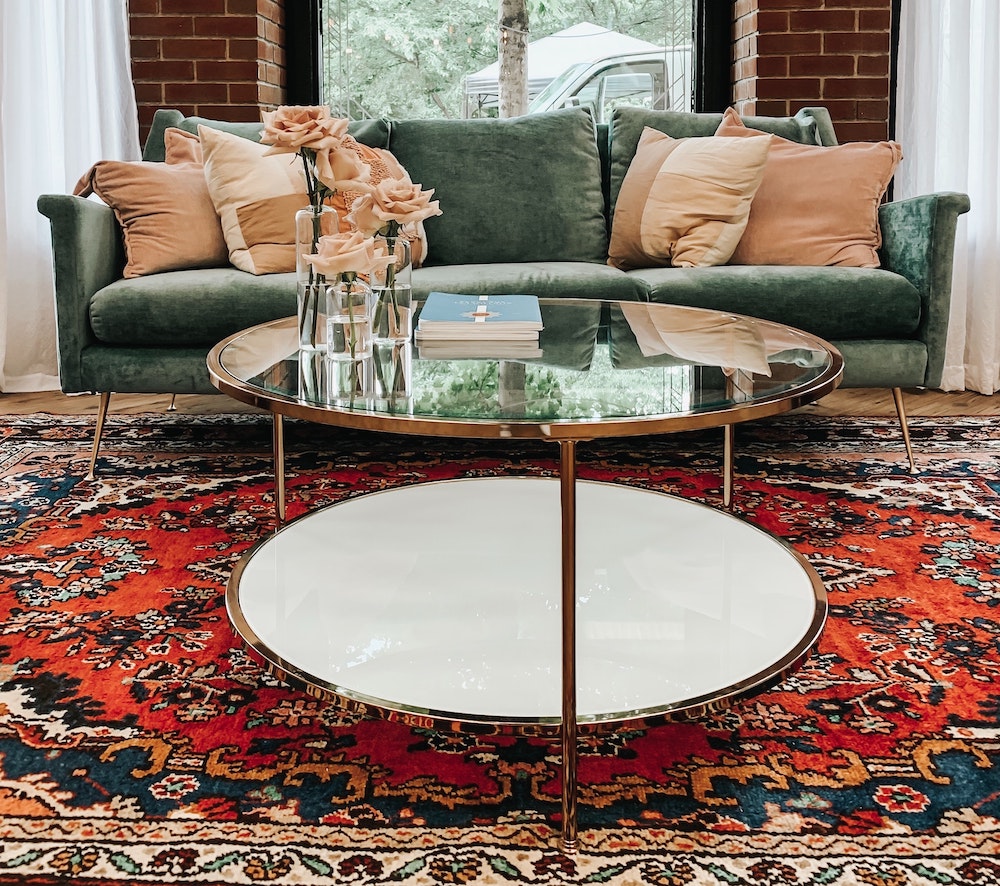
How to Clean an Oriental Rug Yourself
Easy Ways to Clean the Oriental Rug at Home
Cleaning up little messes and smudges is simple. Despite the fact that professional cleaning is required every year due to the delicate nature of the Oriental rug, it is possible to extend the life of your rug by cleaning it on a regular basis. Do you find rug cleaning to be a difficult task? There is nothing more intimidating than vacuuming! Cleaning an Oriental rug can be simple if you do it right.
1. Vacuum Clean the Oriental Rug
Always start with a good vacuuming job! Before using a steam carpet cleaner or cleaner, the rug should be properly cleaned using a conventional household vacuum cleaner. You may use it to get rid of loose soil and any debris that has been brought inside the house.
Fluffing the rug strands will also loosen the embedded dirt. As a result, the rug washing process will be more efficient since you will be able to wash it more thoroughly. If you have a one-tank steam cleaner, this reduces the number of times you must refill the dirty water throughout the rug cleaning process.
In the course of vacuuming, we may also come across little items that might impede the rug cleaner. These may be hair accessories as well as small toys which can impede the hose and create some downtime. Even if you’re using a strong steam cleaner, pre-vacuuming your rug before cleaning makes the process more effective.

As said above, you should vacuum your Oriental rug at least once every two weeks. It can keep your rug looking and smelling fresh for longer. Vacuum the rug carefully to remove any abrasive particles, fur, or debris that may have accumulated. To remove all of the dust from your rug, repeat the procedure three times (on both rug sides). When vacuuming, keep the following points in mind.
If you have fringes, don’t use a vacuum on them, since they might get caught in the machine. Instead of vacuuming against the rug strands, move in the direction of fibers. Vacuuming Oriental rugs has its risks, and that’s understandable. It’s better to be safe than sorry! Choose your equipment wisely when cleaning the precious rugs. Is it possible to vacuum an Oriental rug? Absolutely! There’s no denying that safe vacuuming is possible. If you’re cleaning a valuable or antique rug, we recommend using specialized rug equipment, such as an electric sweeper. When using a vacuum, you must switch off the beater bar. Using a beater bar to remove loose fibers might result in serious harm to a material.
When approaching the border of a carpet, never approach it as if you were moving perpendicular to it. The best way to remove all of that suction is to step away from the rug, then brush that edge around the side of it. It prevents the vacuum from picking up the fringe. When you break the air pressure, you get a clean edge, and you won’t ruin the fringe as well.
Use a beater bar-style vacuum cleaner to clean the rug’s reverse side after flipping it over. Dirt and sand trapped in the rug’s pile are loosened by this process. Once you’ve finished vacuuming, make sure to pick up any loose dirt from the pile under the mat. After a long period of time without cleaning, it may be necessary to repeat this process twice.
2. Gently Sweep the Rug
Rather than scrubbing the dirt from your rug, it’s preferable to simply wipe it down with a damp cloth to prevent causing any harm. Never move a straw brush while cleaning your Oriental rug. Instead, sweep it from one end to the other. Sweeping back and forth over the rug might destroy it.
To avoid ruining the rug, don’t swish your brush back and forth. The primary function of sweeping is to remove dust from the fibers and give them a clean, new look. Isn’t this the simplest thing you can do?
3. Shampoo-Clean the Oriental Rug
Oriental rugs may be cleaned with a natural, pH-neutral liquid cleanser and cold water. Do not use strong chemicals or hot water. Woolen fabric and carpet cleaners perform nicely. If you’re worried about the color run, test the cleanser on a tiny piece of the rug beforehand. However, this isn’t usually an issue with a high-quality Oriental rug.
Pour the cleaning solution into a bucket of cool to warm water and stir until a fizzy mixture forms. Apply some water and suds to the rug with a soft brush or towel. Work in little parts of one sq foot at a time and avoid scrubbing the rug too vigorously. If required, repeat the procedure.
Clear any loose debris and soap residue from the rug using a squeegee. Do not apply it against the fibers. Before using the squeegee, spray the rug with a small mist of water to remove any remaining soap residue.
You may also spread some microfiber of dry towels on the rug and slowly walk over them to absorb as much extra liquid as possible. Avoid overdosing on the rug since this will only make the drying time longer.
Before placing your Oriental rug back to where it belongs, it’s important to dry it properly. If you skip this step, mold, foul odors, and even weakening of the rug weave might occur, resulting in the rug rotting.
Your rug should be dried in an open area, rotated, and kept flat while drying. If you want to shorten the drying period, use a fan. While it’s best to keep it out of the sun for as long as possible to avoid the pattern from fading, a day or two in the sun should be enough for drying.
Wool has a tendency to hold onto moisture, thus drying time for an Oriental rug might be as long as three days.
Spot Cleaning an Oriental Rug
Spills should be cleaned up as soon as possible. Use paper towels to soak up any remaining liquid. Stains can be exacerbated by rubbing the fibers back and forth.
Add some warm water and a half cup of white vinegar to a spray bottle and shake well. A clean, white cotton towel should be used to apply the mixture to the stain and let it settle for a few minutes. After that, blot it off. Baking soda and vinegar work well on stubborn stains. To thoroughly clean the rug, apply the solution and let it sit for about an hour.
Sprinkling baking soda on the rug before cleaning will help remove musty odors. Don’t let your dogs or children walk on the baking soda until you remove it from the rug.
As long as the stain or spill isn’t too big, dish soap will do the job. For more significant incidents, such as a red wine spill on the rug, you’ll need to bring in an expert as quickly as possible.

How Long Does It Take to Have Oriental Rug Cleaned?
The amount of time required to clean your rug can vary depending on the task at hand. You should expect it to take between 2 and 3 weeks in most cases, assuming no further services are required.
What Does Professional Rug Cleaning Look Like?
The size, region of origin, manufacturing techniques, material, age, and colors of your rug are all factors that will influence how it will be cleaned and preserved. In most situations, ancient Oriental rugs will be manually swept to eradicate sharp grit and debris that has become lodged deep inside the rug pile throughout the restoration process.
After that, liquid washing chemicals are used to remove dirt that has become bonded to the fibers and has dulled the color and brilliant shine of the fabric. Rug cleaning specialists should have extensive training in the most effective cleaning procedures. White and ivory rugs are also treated using oxygen-based treatments in order to eliminate the oxidation that causes the yellowing of the material.
When required, rug cleaners reinforce weak sections and cover them with protective cloths to keep wear and unwanted friction to a minimum. Choose only professional rug cleaning specialists who actually pay close attention to the specific requirements of each and every Oriental rug.
A climate-controlled drying chamber is used to dry ancient Oriental rugs after they have been cleaned and the cleansing solvents have been removed. Even the highest pile rugs will dry fast and fully in this environment because of the circulation of warm, dry air.
How Often Should You Clean Your Oriental Rug?
Oriental rugs need to be cleaned on a more or less frequent basis, depending on how often they are used. In general, Oriental rugs should be thoroughly cleaned (by a professional cleaning company) at least once a year, if not more often than that. To ensure that antique carpets preserve their aesthetic beauty, only the best cleaning procedures should be used to clean and maintain them. Nevertheless, if the Oriental rug is put in a high-traffic area, I advise cleaning it every six months. To determine if your rug requires cleaning, just massage the fibers with your palm for several seconds until you see the dust fly out of them. If you detect a sign like this, don’t put off cleaning. The buildup of dust and grime might make it difficult to remove all of the impurities, limiting the efficacy of subsequent cleanings.
If you clean the rug too seldom, it will result in the collection of dirt. If you clean it too often, it may cause the fibers to break down. You should find a compromise and maintain a moderate cleaning frequency. Wash the rug before it appears to be in need of cleaning. A regular cleaning (vacuuming) of an ordinary residential oriental rug should be done approximately once a week.
Vacuuming oriental rugs on a regular basis is especially important in heavy traffic areas. In rugs, dry particle matter makes up about 80% of the soil and, if not cleaned, acts like sandpaper, speeding up deterioration. Thicker rugs that aren’t vacuumed on a regular basis might accumulate dried soil and become nearly impossible to remove.
How to Find Oriental Rug Cleaners Near Me
What does a professional oriental rug cleaning look like? The rug is thoroughly inspected before washing, the colors are tested for resilience, and the rug is tagged for easy identification. The following step entails “dusting” the rug. Prior to cleaning the rug, the cleaners will airbrush it and use dusting equipment to clear the dried soil from it before proceeding to wash.
In most cases, Oriental rugs should not be cleaned at home unless there are exceptional reasons. For example, if it’s too large or heavy for being carried to a cleaning facility. When working with skilled, skilled rug cleaners that provide pick-up and delivery as part of a deal, this is often not a problem at all. Cleaning a rug at home produces soap and dirt residue in Orient rugs. This may lead to even a quicker soil buildup. Additionally, rug fringe cannot be cleaned at home, and insufficient drying may lead to the growth of mildew.
How to Remove Odor from the Oriental Rug
Allow It to Sit Outside in the Sun
Moisture may be present underneath your rug even though it seems to be dry on the top. Because UV rays from the sun are powerful antibacterial agents, they can assist in eliminating foul smells when bacteria is the source of the problem. Allowing the rug to sit outside on a bright day and bringing it inside before dusk will help to prevent mold from building on it. If required, do it all over again for several days, making sure that each side receives an equal amount of exposure to the light.
Use a Fan to Dry the Rug
As an alternative to leaving the rug outside, direct a floor fan may help. Direct it to the rug one section at a time. Starting from the borders and working your way inwards.
If the scents continue after the carpet has dried, sprinkle a thin coating of baking soda and let it rest for at least 30 minutes before sweeping. Contemporary vacuum cleaners are often too abrasive for antique rugs. That’s why it is better to use a rug sweeper rather than a vacuum cleaner. Alternatively, if you wish to clean with a vacuum, use it without a beater bar.
Oriental Rug Cleaning Cost
Professional Rug Cleaning Costs
A regular professional rug cleaning eliminates dirt that dulls the rug color and decreases the shine. Furthermore, frequent cleaning may help to avoid major challenges such as pest infestations, which can have a negative impact on the appearance and value of a rug if left untreated. To keep their beauty, quality, and resale value, oriental rugs should be thoroughly cleaned every 6-12 months, depending on traffic and rug location.
Oriental rug cleaning costs are calculated by multiplying the rug’s length by its breadth and then multiplying that amount by the cost-per-square-foot of the rug.
In order to assess the price of Oriental rug cleaning, a standard formula is used. This calculation is influenced by the size of the rug, which is estimated in square feet. If you want to measure the size of the Oriental rug, simply multiply the width by the length of the rug. The square footage of your rug is the outcome of this calculation.

Please keep in mind that if your Oriental rug includes tassels or fringe, you should include those lengths in your length measurements.
As an example, if your Oriental rug is 5 feet wide and 8 feet long, it has a surface area of 40 square feet. To get the price of a rug, multiply the number of square feet by the rug’s square foot size (in square feet) (also per square foot). Assuming a hypothetic cleaning cost of $2 per square foot, we’d be looking at a total of $80.
Take note that the type of material used to create your rug, as well as how it is constructed, will have an impact on its cost.
Let’s have a look at the various types of fabrics and the corresponding Oriental rug cleaning costs for each one.
- Synthetic materials: $2.7/square foot
- Machine-made wool: $3.6/square foot
- Handmade wool: $4.3/square foot
Rug Pad Cleaning Costs
When it comes to the pad beneath an Oriental rug, many people overlook it. Isn’t it covered up? Pet excrement, spillage, and all spills that damage your Oriental rug may also really harm your rug pad. So sure, they have to be cleaned as well.
Rug pad cleaning costs about $.81/square foot.
DIY Rug Cleaning Costs
It costs $30 to $50 a day to rent a do-it-yourself rug washing machine. They are effective on synthetic fabrics but might cause harm to expensive or handwoven textiles. Even though taking the Oriental rug to a dry cleaner is a low-cost alternative, it does not remove the dust and grime from the rug’s fibers.
According to our friends at Euronics, some rug pads can be cleaned in washing machines. Carefully read the product label and care instructions before attempting a DIY cleaning.
How to Protect the Oriental Rugs and Keep them Clean Longer
Keep an eye out for wool-eating moths – The presence of any moths in the area indicates that your rug has already been infected, so expert assistance is out of the question. Periodically inspect the top pile as well as the base of your rug for signs of wear. Look for signs of moths, particularly the light silky cobwebs left by the larvae of the species. Moths are a common problem in certain homes. If you fall into this group, you should apply moth spray on a regular basis, even on the back surface of rugs that are in regular use.
- Storing your carpets – If you store your rugs folded, place some moth traps to keep moths away. Inspect your rugs once every few months. In order to prevent water and humidity from entering the rug, make sure it is completely wrapped (and sealed). In addition, I recommend avoiding placing the rug directly on the floor. After all, it may be months before you discover a leakage, and you would certainly not want your Oriental rug getting wet.
- If you like aromatherapy, make sure to keep candles away. As a result, the molten wax and ash won’t come into contact with the rug.
- Ensure that you place holders under flower pots so that the water may pool but does not spill onto the rug.
- If you have an ancient Oriental rug, frequent spills from foods and drinks will damage it.
- Even the best rugs will wear out over time if subjected to regular foot traffic — this is a proven truth. However, by following these simple strategies, you can extend the life of Oriental rugs and keep them looking good for longer.
- Rug rotation is essential. Turn it over every year. As a result, the foot traffic should be spread evenly throughout the full area of the rug.
- Wipe dust and grit from your rug regularly. Otherwise, the pile will be worn down by foot traffic, and the rug will become unusable. Having said that, it’s crucial to remember that cleaners with strong and sharp bristles can cause harm to rug fibers.
- Stay away from exposing your Oriental rug to direct sunlight for a long time. Because of the color saturation of your rug, this might make the hues appear duller. It has a negative impact on the rug’s appearance as well as its lifespan.
What causes little white knots to emerge on the rug surface after cleaning?
During the weaving process, white knots are formed by fractures in the foundation of a rug while it’s on the loom. Splicing the breaks together is accomplished by forming two knots at either end of the breaking. If you buy a rug while it is brand new, the whole height of the pile might hide these white knots from view. Later, these knots are exposed by the pressure of foot traffic and harsh washing. Don’t cut them because it will weaken the rug’s structural base.
Conclusion
“How do I clean the oriental rugs?” is a question that we are frequently asked. Without a doubt, a brilliant question! Wool and silk carpets are incredibly unique, and the fibers may be extremely robust, lasting for many years in the right conditions. Wool and silk carpets, when cared for properly, may survive for years and be passed down from generation to generation. That is very unique! In the end, a clean oriental rug is more visually attractive to look at. Noone likes looking and walking on the nasty rug with grime-infested fibers. Oriental rugs may be cleaned to extend their life expectancy, resulting in a larger return on your investment.
To summarize, don’t underestimate the value of cleaning the oriental rugs in maintaining a healthy atmosphere. Getting rid of germs and grime on a regular basis might possibly save you a small fortune in prescription medicine! In addition, cleaning an oriental rug is not the most difficult chore, and considering the benefits, it is well worthwhile. Depending on the problem, you may try any of the several cleaning procedures described in this post.